


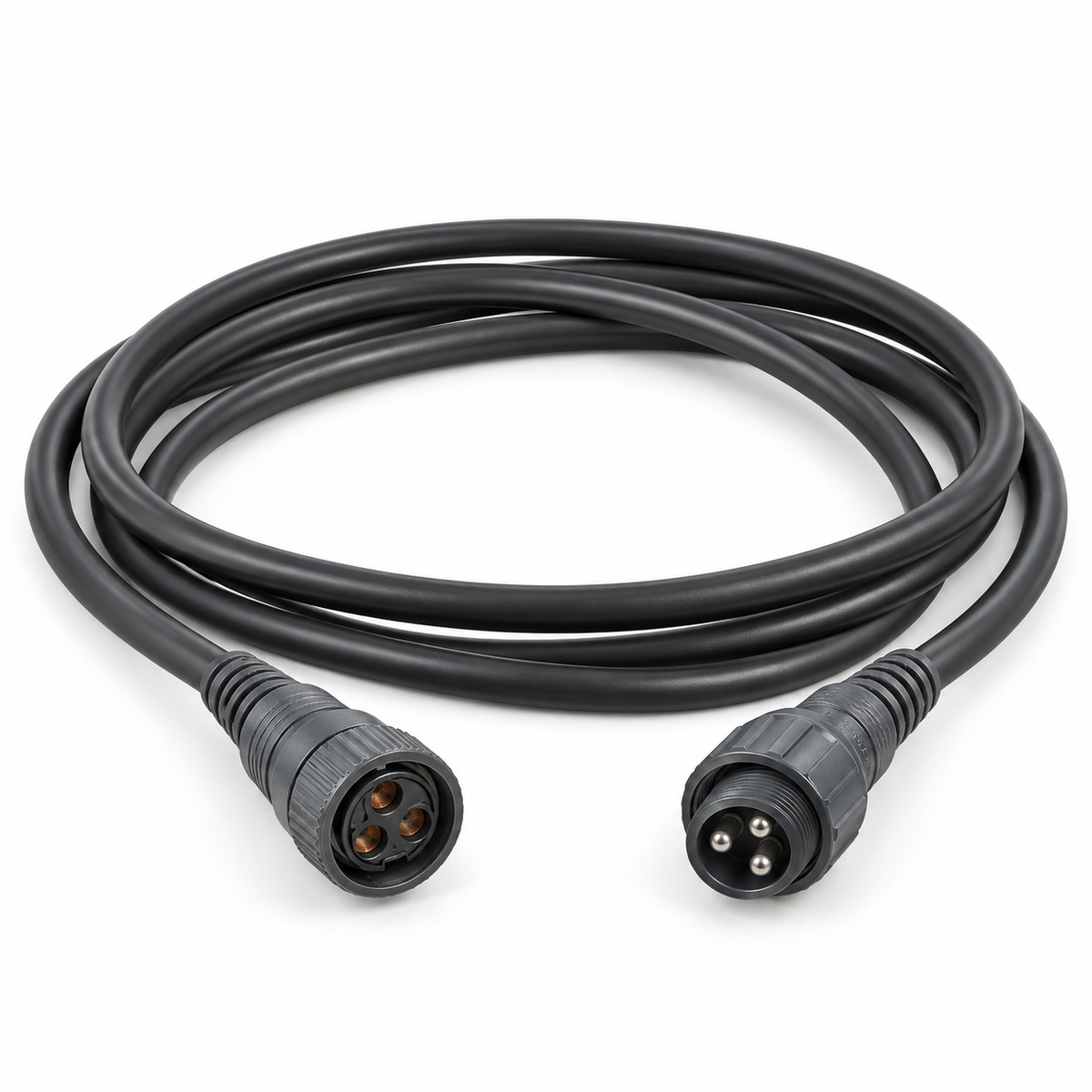
Mat-to-Mat Extension Cable (10 ft)
Mat-to-Mat Extension Cable (10 ft)
- Black ice never gets to form
- No more "one wrong step" mornings
- Clear steps for the morning mail run
- No risky shoveling on icy steps
- Peace of mind when you can't be there
Most front steps fit the Standard mat.
Couldn't load pickup availability
Money-Back
Warranty
Power Unit


Is it safe with all the snow, ice and water on it?
Yes. The heating wires are fully sealed and insulated inside thick, waterproof rubber, so water never reaches anything electrical. The cables are insulated too, and the connectors twist shut watertight. The mat is built to lie in snow, slush and rain all winter long. The included power unit has built-in GFCI protection, so it cuts the power instantly if anything is ever wrong.
How do I install and connect the mats?
1. Clear the step of snow and sharp objects like stones.
2. Lay one mat on each step, cable facing your outlet.
3. Plug the mats into each other and twist the waterproof connectors until they lock.
4. Plug the mats into the included power unit, then plug the power unit into a standard outdoor outlet. That's it, no tools, no electrician and nothing extra to buy. Most people are done in under 5 minutes.
Does it work on any surface, and will it slide around?
It works on most outdoor surfaces: concrete (ideal, the most common surface for front steps), stone, brick and pavers, asphalt, sturdy outdoor wood steps and metal steps. On composite, painted or sealed surfaces, place a thin outdoor rug underneath to protect the finish. The heavy rubber and grippy underside keep it in place on flat steps. For extra hold in wind or on sloped surfaces, use the grommets in each corner to screw or tie the mat down.
Does it get hot? Can it burn or discolor my steps?
No. The mat gets warm, never hot. In freezing weather it heats to about 95–113°F, just enough to melt snow, so it's safe to touch and safe for pets' paws. It won't burn or discolor your steps. On painted wood, composite decking or sealed stamped concrete, we recommend a thin outdoor rug underneath to protect the finish.
How long are the cables?
The power unit cord is about 6.5 ft long, and the connecting cable between mats is about 16 inches, enough to link mats on neighboring steps. For mats that are further apart, a 10 ft mat-to-mat extension cable is available. If your outlet is further away from the power unit, any outdoor-rated extension cord works.
How do I turn it on and off, and how much power does it use?
Plug it in to turn it on, unplug it to turn it off. Best results: switch it on 1–2 hours before snow is expected and off once the storm has passed. A step mat uses about 108 watts, roughly 2¢ per hour or about 20¢ for a full snow day. Tip: with a simple smart plug, you can switch your mats on and off from your phone, no need to go outside.

Every winter I get called out to elderly patients who slipped on their front steps. Broken hips, head injuries — sometimes from just one patch of ice. I bought these mats for my parents' porch after a neighbor of theirs ended up in the ER. The steps stay completely clear now, no shoveling, no salt damage. My mom actually goes outside again without me worrying about getting that call. Best money I've spent in years.
Bridges a landing or a gap between steps. 10 ft (3 m) of weatherproof cable with the same waterproof screw connectors as the mats, so it plugs straight into your chain. No tools, no adapters.
- Melts up to 2 inches of snow per hour, before it turns to ice (less in extreme cold or strong wind)
- Heating element sealed inside thick, waterproof rubber
- Non-slip tread for steady footing, even in freezing rain
- Heats to about 95–113°F in freezing weather
- Connect up to 8 mats with the waterproof plug-and-lock connectors
- Uses about 108 W per mat, roughly 2¢ per hour
- Power unit included (ETL-certified, GFCI protected), nothing else to buy
Every order comes with an ETL-certified power unit with built-in GFCI protection. It connects your mats to a standard 120V outdoor outlet.
You can connect up to 8 mats to one power unit. Each mat uses about 108 W. For more than 8 mats, use a second power unit on a separate outlet.
Before first use
- Plug the mats into each other and twist the connectors until they lock.
- Plug the mats into the power unit, then plug the power unit into the outlet.
- After 15–20 minutes, check that the mats feel warm.
- That's it. Now you can sit back and enjoy a carefree, snow-free winter.
Operation:
- Switch the mats on before snowfall so snow melts the moment it lands.
- If heavy snow has built up, clear the excess snow first, then switch them on.
- The mats can stay on during snow or icy conditions.
- For use below 40°F only. Once it's warmer or your steps are clear and dry, unplug them.
Cleaning & Storage:
- At the end of winter, clean with mild soap and water and let dry completely.
- Store indoors, rolled loosely or laid flat.
- Don't leave the mats outdoors in summer, as sun exposure shortens their lifespan.
The mats can be placed on most outdoor surfaces:
- Concrete: ideal, the most common surface for front steps.
- Stone, brick & pavers: great for patio and garden steps.
- Asphalt: handles the warmth without issues.
- Wood: suitable for sturdy outdoor wood steps.
- Metal steps: fine, the mat's rubber base protects the surface.
- Composite, painted or sealed surfaces: place a thin outdoor rug underneath to protect the finish.
- Clear the step of snow, ice and sharp objects like stones.
- Lay one mat on each step, with the cable facing your outlet.
- Plug the mats into each other and twist the waterproof connectors until they lock.
- Connect the power unit and plug it into an outdoor outlet.
- Done in about 5 minutes. Switch on before the next snowfall.
Loved by over 12,800 happy customers

Bought these for my parents after my dad slipped on their front steps last January. He was lucky — just bruises — but it scared all of us. The mats have been running all winter and the steps stay completely clear. My mom says she actually feels safe going outside again. Worth every cent for the peace of mind alone.

I'm 74 and I live alone. Shoveling my porch steps every morning was getting dangerous — I was afraid of falling while trying to prevent a fall. Plugged the mat in, and now I just walk outside. No salt, no shovel, no waiting for the neighbor kid. Should have done this years ago.

Was paying around $800 a season for snow removal just for the walkway and steps. These mats paid for themselves before Christmas. Setup took maybe 10 minutes — unroll, plug in, done. They melt through a good 4 inches of snow overnight without any issues.

Honestly I was nervous about electricity and snow — seemed like a bad combo. But there's no exposed wiring anywhere, the whole thing is sealed. It's been through two Minnesota winters on my concrete steps, rain, sleet, heavy snow. Not a single issue. I'm an electrician and I'd recommend this to anyone.

Got the stair set plus the walkway mat for my mother-in-law's house in upstate New York. She refused to move to assisted living and this was our compromise — if the steps are safe, she can stay. Three months in and not a single slip scare. She calls it her "magic carpet."

My biggest worry was the mats sliding around on my mom's wooden porch steps — she uses a cane and any movement under her feet would be a disaster. Turns out they grip like they're glued down. Even after freezing rain the mats don't budge. Mom walked out this morning in her slippers and didn't think twice. That alone is worth more than what we would have spent on a single ER visit.

I kept picturing my dad's flagstone steps cracking from the heat or getting scorch marks. Almost didn't order because of it. Four months later — not a mark, not a crack, nothing. The surface only gets to about 100°F, warm enough to melt snow but you can touch it with your bare hand. Dad says his steps look better than before because there's no more salt damage eating away at them.

My dad's 78 and not exactly handy anymore, so I figured I'd need to hire someone to install these. Nope. I drove over on a Saturday, unrolled them on his steps, daisy-chained the connectors, and plugged the power unit into his outdoor outlet. Took less time than making coffee. He called me the next morning all excited — six inches of snow overnight and his steps were completely clear.

I almost talked myself out of it — "great, another thing running up the electric bill all winter." Then I looked it up: about two cents an hour per mat. We run five mats and our bill went up maybe $12 a month. Meanwhile my mom's neighbor broke her hip on icy steps last February. Surgery, rehab, months of recovery. We'll happily pay $12 to never go through that.

Not gonna lie — electricity plus standing water plus snow sounded like a terrible idea. I almost returned them before plugging them in. But the power unit has a built-in GFCI that cuts the power instantly if anything's off, and the whole mat is sealed. We've had puddles, sleet storms, a foot of heavy wet snow. Not once has it tripped or caused any issue. My mom walks out to get the mail every morning without me worrying about a phone call from the ER.
Swipe to see more reviews →

What happens to your steps on a winter night
Ice doesn't announce itself. During the day, the snow on your steps melts a little. After dark it freezes again, into a thin, clear layer you can't see from the door.
Salt and shovels can't prevent that. They only help once the ice is already there, and someone has to step outside to use them.
StepSafe works the other way around
Instead of fighting ice after it forms, it keeps the step itself warm. Snow melts as it lands, the water runs off, and there is nothing left to freeze overnight.
Where Ice Becomes Dangerous
Every step outside your home collects meltwater. These are the ones that freeze first.
Invisible
Black ice looks like a wet step. You only notice it when your foot is already sliding.
Refreezes overnight
Snow that melts during the day turns into a sheet of ice by morning, right where you step first.
One step is enough
It only takes one icy step between the door and the driveway.

Built from what first responders see every winter.
Paramedics know the pattern all too well: families trust that a handful of salt or a quick shovel will keep their steps safe — but the ice comes back, and the call comes in too late. Our heated mats keep stairs clear before the ice ever forms, so your family has more time to walk out safely instead of waiting for help.
For older adults, one fall on an icy step can change everything.
Falls are the leading cause of injury-related death for Americans 60 and older. And the most dangerous steps aren't on a hiking trail or in a store. They're the few steps between the front door and the driveway, the ones your parents walk every single winter morning to get the mail, take out the trash or let the dog out.

fall every year
More than one in four Americans 60+ fall each year.
hip fracture hospitalizations
Older adults hospitalized for a broken hip every year.
cause of injury death
Falls are the leading cause of injury death for adults 60+.

Is your parent at risk?


Stop fighting ice after it forms. Stop it before it starts.
Most homeowners rely on rock salt, ice melt and a shovel. The problem: all of them only work after the snow has fallen and the ice is already there. Salt leaves the steps wet and slick, grip tape disappears under the next snowfall, and shoveling means bending over on the very step you're trying to make safe. StepSafe keeps the surface warm, so snow melts the moment it lands and ice never forms.


What salt, shovels & grip tape miss
- Salt only works once the ice has already formed
- Ice melt leaves a wet, slick surface that refreezes overnight
- Salt eats away at concrete and burns pets' paws
- Grip tape gets buried under the next snowfall
- Shoveling means bending and lifting on the icy step itself

How StepSafe helps
- Melts snow as it lands, so ice never forms
- Non-slip tread grips even in freezing rain
- No salt needed: safe for concrete, wood and paws
- No shoveling, no bending: just plug it in
Don't wait for the first fall to take icy steps seriously.
Ice forms quietly overnight, often where you can't see it. The real danger is believing the steps are fine, until one morning they aren't.
Older Americans end up in the emergency room after a fall about 4.5 million times a year.
Falling once doubles the chance of falling again, so the first fall is the one to prevent.